The Nomad Ops Book the audit

Results from four industries and my own desk.

Case studies from AI systems and fractional COO work: what it produced inside real businesses. The clients stay unnamed, and every number on this page is one I can source.

Every number has a story.

Pick an industry. Each card is one result and where it came from; the full stories are further down.

  • A home services companyCrew payroll

    46%

    Crew payroll as a share of revenue, down from over 80% in one quarter.

  • A home services companyNet cash

    $30Ka year

    About that much back in net cash, from roughly $2,700 a month in the red to positive.

  • A home services companyManagement layer

    $2K to $4Ka month

    Saved by removing a redundant management layer.

  • A home services companyThe owner's day

    90%

    About that much less of the owner's day spent inside the operation.

  • A home services companyThe schedule

    2weeks ahead

    Scheduling moved from the morning of to two weeks out, on routes.

  • A home services companyJob pricing checks

    $37

    The floor per booked labor hour. Every recurring job is checked against it once a month.

  • A home services companyHiring

    217

    Applicants read in one hiring push, and the shortlist screened against a written playbook.

  • A private lenderLoan servicing

    From scratch

    Servicing operations built from nothing to a running operation.

  • A private lenderPlatform setup

    95%

    Of the servicing build done in the loan platform's own settings, not custom code.

  • A private lenderWire verification

    2people

    Callback verification by two people on every outbound wire.

  • A private lenderLien releases

    18

    Releases drawn in one session, from a register that watches the 90 days after every payoff.

  • A media companyProduction

    20+channels

    At 60 to 80 videos a month at peak.

  • A media companyApprovals

    40%

    Faster approval turnaround, by removing the bottlenecks.

  • A media companyThe portfolio

    20+ to 5

    Channels cut to a focused five. Quality and margin both went up.

  • A hospitality groupThe owner's day

    30min a week

    Owner involvement, down from 10-plus hours a day in 90 days.

  • A hospitality groupCustomer operations

    91%

    On time across more than 1,000 customer operations.

  • A hospitality groupEscalations

    60%

    Faster escalation response.

  • A hospitality groupShift coverage

    7days

    Coverage across six locations on a shift rotation, with zero downtime.

  • My own deskMy morning list

    6:15AM

    An AI system I built in Claude Code reads my calendars, inboxes and project files and hands me one ordered list.

  • My own deskReplies I owe

    Drafted

    It drafts the replies. I read them, decide and send.

The stories behind them.

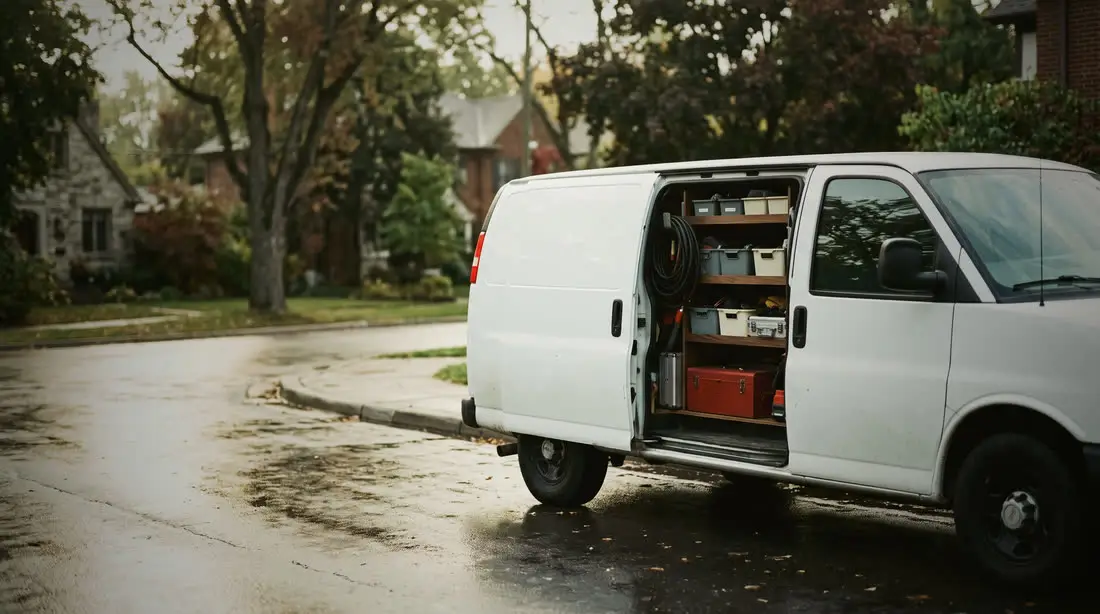
A white service van parked at a wet curb in morning light, side door open on tidy shelves

A home services company

A field team of about 20, taken off the whiteboard

The situation

A growing home services company with a field team of about 20, still running inside its founder. Scheduling happened the morning of, quality lived in people's heads, and growth was capped by the owner's hours.

What was built

  • A field service setup with GPS tracking, automatic invoicing and client messaging.
  • The calendar moved from the morning of to two weeks ahead, with every job routed by each crew member's home base.
  • A procedure handbook for every service type and an end-of-job walkthrough.
  • An operations portal for inventory, supplies and laundry.
  • The website, with a live instant quote.
  • A phone receptionist, set up and tuned inside the field service tool.
  • An operations coordinator, hired and onboarded to run the day to day.
  • A $37 floor per booked labor hour, with every recurring job checked against it once a month; a job under it gets fixed by frequency, crew or route, never by a surprise change to an agreed price.
  • And a written hiring playbook: in October 2026 I read all 217 applicants on one job posting and screened the shortlist against it, with home base, shift and a work reference confirmed before any offer, and paperwork due inside 48 hours.

The results

  • Crew payroll from over 80% of revenue to 46% in one quarter
  • Net cash from roughly $2,700 a month in the red to positive, about $30K a year back
  • The owner's daily involvement down about 90%
  • A redundant management layer removed, saving $2,000 to $4,000 a month
  • Morning-of scheduling replaced by two-week scheduling on routes

Related: fractional COO for home services companies and scheduling and dispatch systems.

A stack of file folders with a black fountain pen on a desk striped by window blinds

A private lender

A lender whose system remembers, so people do not have to

The situation

A private lender whose loan book was growing faster than a manual servicing routine can carry. In lending, the risk lives in the gaps between events: a policy that lapses, a maturity that arrives quietly, a wire sent on one instruction.

What was built

  • Loan servicing operations, built from scratch inside the loan platform after a capability audit showed about 95% of it could be done in the platform's own settings.
  • Borrower emails triggered by loan stage.
  • An expiration watch on insurance, property tax and association dues, with scheduled digests.
  • Late-payment and maturity reminder ladders.
  • A release register for the 90-day window after every payoff.
  • Two-person wire verification by callback, backed by recorded calls.

The results

  • Servicing built from scratch, mostly in the platform's own settings
  • An expiration watch on insurance, tax and association dues
  • A release register for the 90 days after every payoff; 18 releases drawn in one session
  • Two-person verification by callback on every outbound wire

Related: fractional COO for private lenders and loan operations.

An edit bay with two monitors, headphones and a hand on an editing controller

A media company

A media company that got better by cutting

The situation

A video production company running channels across several content areas: 20-plus channels at 60 to 80 videos a month at peak. The output was there, but quality was uneven, accountability across a distributed team ran through the founder, and nothing showed which channels earned their production cost.

What was built

  • Accountability across the production team, tied to output.
  • Dashboards showing output per channel, team performance and revenue.
  • A way to decide which channels returned their cost and which only consumed it.
  • A team structure sized for a smaller, better portfolio.
  • Written procedures for every repeatable production step, so quality held without the founder reviewing every video.

The results

  • 20-plus production workflows run at once, across time zones
  • Approval turnaround cut about 40% by removing the bottlenecks
  • The portfolio cut from 20-plus channels to a focused five; quality and margin both rose
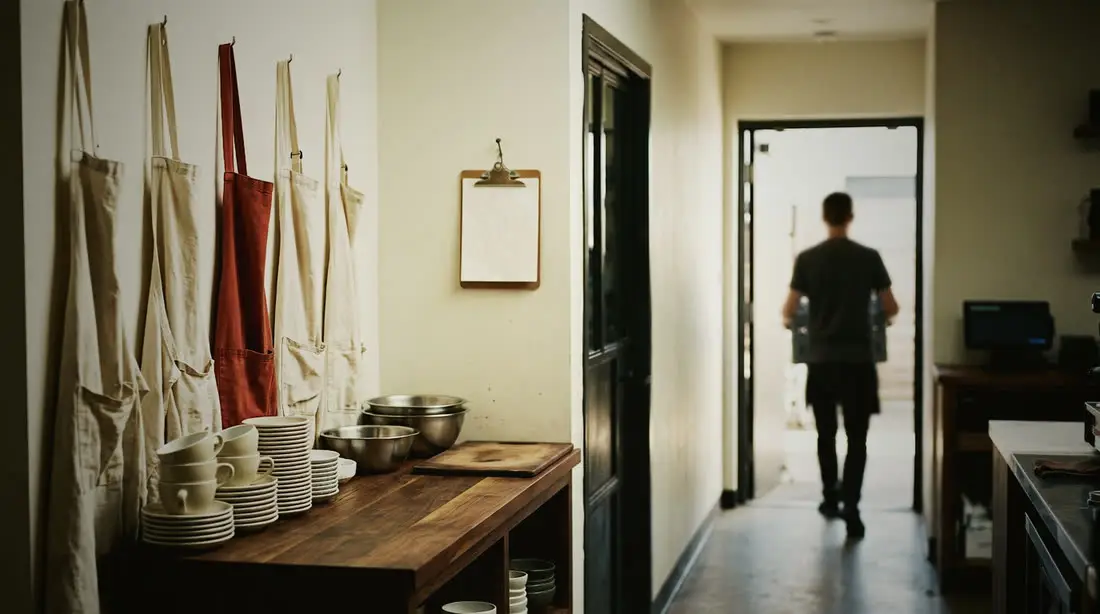
The back room of a cafe before service, aprons on hooks and a figure walking out the far door

A multi-location hospitality group

Six locations that stopped needing the owner every day

The situation

A seasonal operation across six locations, staffing-heavy, with the owner inside the day for 10-plus hours. Every gap in coverage and every escalation found its way back to one person.

What was built

  • Seven-day coverage across all six locations, run on a shift rotation.
  • Written procedures for the work that repeats.
  • An escalation system that sends each problem to the person allowed to decide it, so the owner sees only what needs the owner.

The results

  • Owner involvement from 10-plus hours a day to 30 minutes a week, in 90 days
  • More than 1,000 customer operations at 91% on time
  • Escalation response time down 60%
  • Seven-day coverage with zero downtime, and less labor wasted on idle shifts
A desk before sunrise lit by a lamp, an open laptop and a phone beside it

My own desk

The system I run my own practice on

The situation

Running operations inside more than one business means a lot of inboxes, calendars and open threads, and the cost of a missed reply is someone else's deal or closing.

What was built

  • An AI system I built in Claude Code.
  • At 6:15 each morning it reads my calendars, inboxes and project files and hands me one ordered list: what is ready to send, what is waiting on me, and what is waiting on others.
  • It drafts the replies I owe.
  • It never sends anything on its own.

The results

  • One ordered list every morning, before the day starts
  • Every reply drafted and waiting, and every send a decision I make

Your business could be the next story on this page.

Book the Operations Leak Audit

Complimentary while this season's openings last. I run every audit myself, so I keep the number small.

Book the Operations Leak Audit